
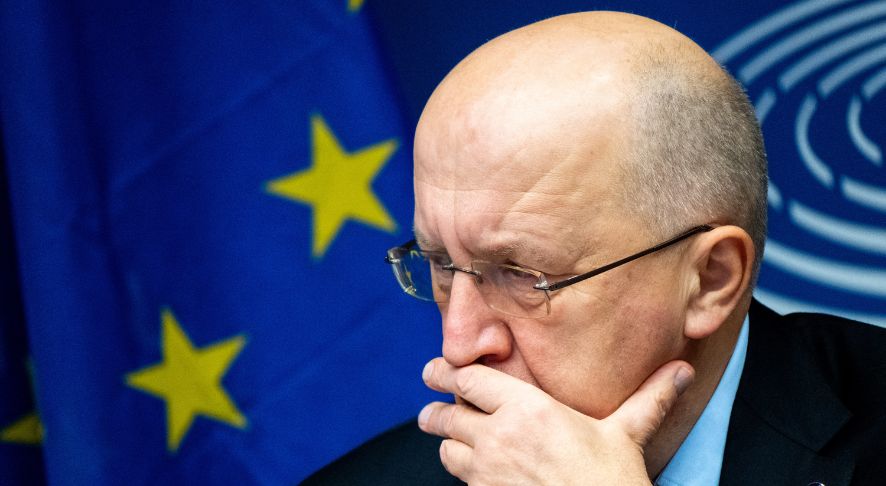
The EU Commission is making defence a top priority, with plans to create a European Defence Union led by a new Defence Commissioner. Boosting Europe’s defence industry is a key goal but competing national interests and funding issues pose barriers to realising this ambition.
The second von der Leyen Commission (2024–29) intends to elevate defence to be one of the European Union’s top priorities and we can expect more concrete plans to support this.
New EU institutional structures reflect changes in priorities, including the appointment of the first-ever EU Commissioner for Defence and Space, Andrius Kubilius, and the upgrade of the Subcommittee on Security and Defence in the European Parliament to a Standing Committee. The current Commission has also committed to building a European Defence Union to help replenish and upgrade European armed forces, increase capacity through flagship defence projects, develop a single market for defence and improve EU–NATO cooperation.
An effective European Defence Union, while complex to set up due to inter-institutional balance, might represent the way forward, provided that it adopts a comprehensive approach that includes relevant stakeholders at the EU and national levels. Indeed, this appears to be the vision of the Commission’s president, who, in early January, established a Commissioners’ Project Group on Defence Union with the aim of developing a coordinated approach to defence. This initiative involves the High Representative for Foreign Affairs and Security Policy and Vice-President of the European Commission, Kaja Kallas, as well as two vice-presidents and four commissioners, including Kubilius who guides the effort.
Big ambitions risk being watered down
The objectives of the defence commissioner’s white paper on defence, expected in early March, include: the replenishment and improvement of European military inventories; strengthening the European defence technological and industrial base (EDTIB); and a functioning single market for defence. According to Kubilius, the EU needs a ‘big bang’ approach in defence, where the EDTIB can satisfy demand at speed to enable member states to be ready for the most extreme contingencies.
Strengthening European defence capacity is even more important given the uncertain political direction of the United States under the second Trump administration, which might demand NATO members adopt higher defence budgets as a requisite for sustained US support of European defence. Even if increasing defence spending to 5% of GDP is unrealistic for most members, it can be expected that the next NATO Summit will include some higher targets beyond the current 2%.

Military Balance+
Military Balance+ | The online defence database from the IISS, delivering authoritative and searchable defence data and insights into military capabilities, policy priorities and commercial opportunities in more than 170 countries.
What to do with this additional money?
As NATO Secretary General Mark Rutte put it, the EU ‘has the advantage of the internal market […] that can help get defence production going at a much higher pace’. According to Kubilius, the EDTIB’s production should mostly focus on the requirements indicated in the NATO capability targets 2044, and specific industry output plans should be used to better understand the production potential of the EDTIB. It would be up to member states to then decide which projects they intend to pursue together by aggregating demand and finances. In the absence of substantial incentives to cooperate, national interests may simply override such aspirations. To address this, one potential pathway would be to prioritise defence projects of common European interest, such as strategic enablers and air defence. Making active participation in cooperative frameworks compulsory would go further in trying to disincentivise members from working alone, but this risks slowing down activities given the potential difficulties in opting out.
Another barrier to realising European defence ambitions is funding. Despite increased investment over the last few years, the total dedicated to defence research and technology did not increase in 2024 and remained below the 2% defence budget target. Moreover, EU estimates foresee a requirement of at least EUR500 billion of additional defence investment over the next ten years to satisfy demand from member states.
In the run-up to the next multiannual financial framework of the EU, Kubilius appears to be favouring a lending policy under which a part of the increase in national defence budgets might be frontloaded for collaborative investments and paid back in future budgets. This approach circumvents the need for an EU guarantee in the case of EU defence bonds. While this may function to solidify cooperative investment, it relies upon the economic outlook of member states and their willingness to frontload money to the EU.
A big bang or big freeze
The ‘big bang’ approach Kubilius is promoting and the steps towards a European Defence Union are meaningful efforts to improve and strengthen European defence. The new balance the Union is seeking needs to carefully establish a large consensus that does not lower the ambition of cooperation. There are significant defence opportunities for the EU, but carrying out such sweeping changes risks developing into a ‘big freeze’ if incentives to cooperate are weak and if members are not given enough flexibility to pursue approaches they believe best serve their interests.